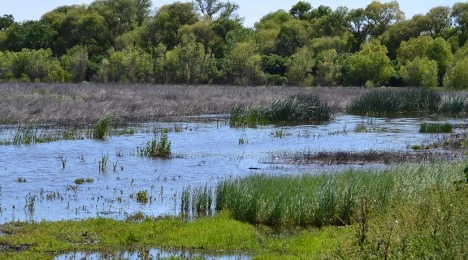

Government of Ghana recognizes the importance of wetlands as a habitat for wildlife, in the maintenance of the water table, mitigation of flood conditions, and water purification. Wetland ecosystems are found throughout the country and account for around 10% of the country’s total land surface. Ghana’s 550-kilometer coastline is dotted with more than 50 lagoons and estuaries.
Wetlands resources are also known to be of socio-economic importance and have been harvested for construction poles, fuel-wood, timber for furniture, and craftwork. Furthermore, wetlands are of importance as fishing, hunting, and grazing areas, and play an important role in crop production and domestic water supply.
Government-led actions are the foundation of wetland sustainability in Ghana. Key institutions such as the Environmental Protection Authority (EPA), the Forestry Commission, Water Resources Commission, and local assemblies are mandated to regulate activities within wetland zones. The implementation of environmental impact assessment (EIA) criteria, buffer zone laws, and wetland conservation rules is critical to reduce damaging behaviours. Additionally, integrating wetland conservation into national development frameworks, climate adaptation strategies, and spatial planning helps ensure that wetlands are not treated as idle lands but as valuable natural assets.
Collaborations with local communities are equally vital for sustaining wetlands. Many rural livelihoods depend directly on wetland resources, making community-based management approaches more effective than top-down enforcement alone. Traditional authorities, community leaders, and local user groups can support conservation through indigenous knowledge, by-laws, and participatory monitoring. When communities are empowered through education, alternative livelihood programs, and benefit-sharing mechanisms, they are more likely to protect wetlands rather than exploit them unsustainably.
Beyond local and national initiatives, multi-stakeholder alliances improve wetland sustainability in Ghana. Partnerships between non-governmental organisations, research institutes, business sector actors, and international development agencies provide technical expertise, finance, and innovative solutions. NGOs like Green Diversity Africa, frequently spearhead restoration initiatives and awareness campaigns, whereas academic institutions collect data to assist policy and management decisions. International collaborations also help Ghana meet its commitments under global frameworks like the Ramsar Convention. Coordinated initiatives and strong alliances provide a feasible method for protecting wetlands and assuring their ongoing contribution to environmental sustainability and human well-being.